
Reducing the Risk of Failed Reimbursements Through Banking Verification
I designed an OCR-assisted verification experience that compares banking information extracted from uploaded documents with user-entered details, helping identify discrepancies before they lead to failed reimbursements.
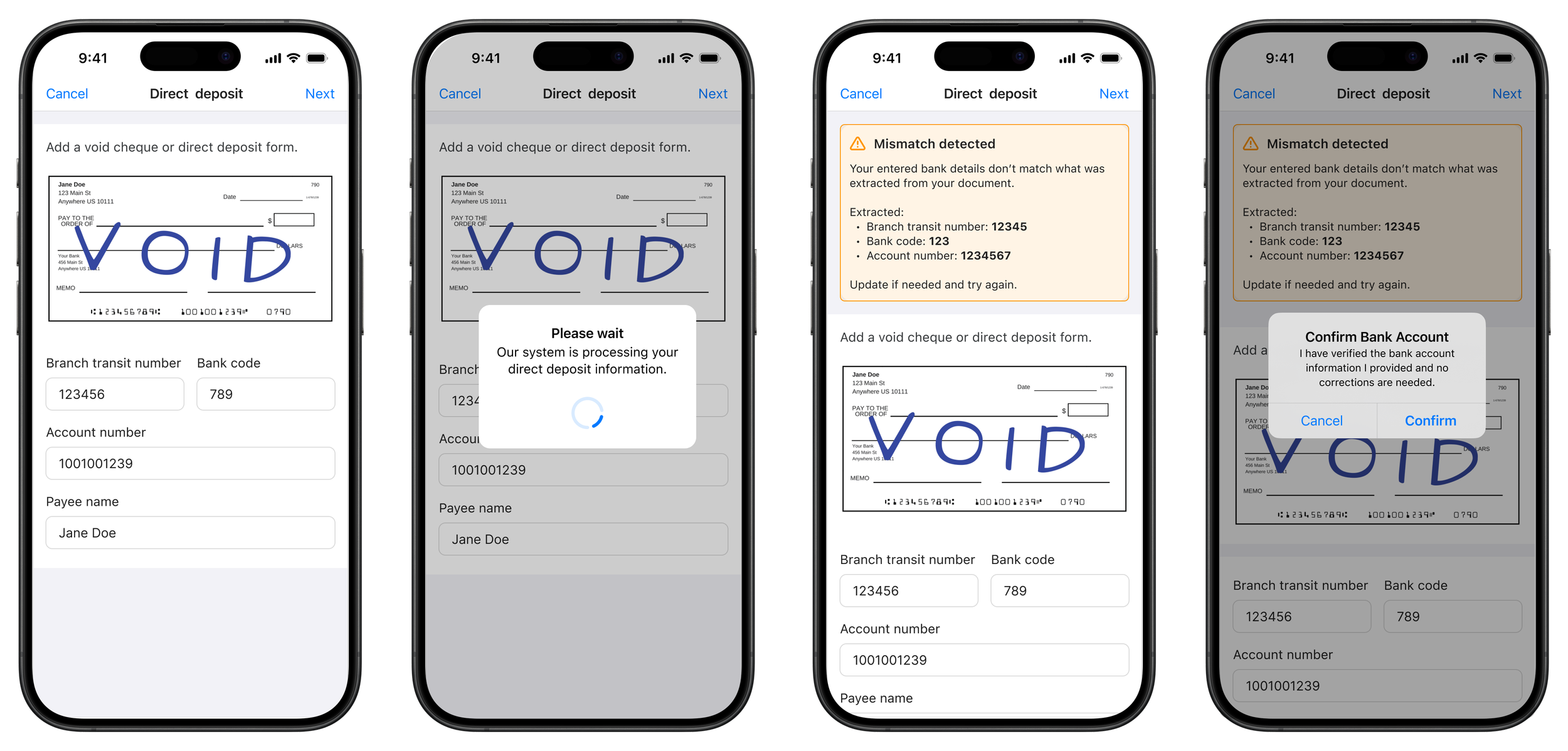
Reducing reimbursement failures caused by incorrect banking details
Incorrect banking information could lead to failed reimbursements, creating additional work to investigate and resolve payment issues.
The goal was to introduce an automated verification step that would:
Extract banking information from uploaded documents to support automated verification.
Compare extracted information with user-entered details before submission.
Reduce the risk of failed reimbursements caused by incorrect account details.
Understanding the workflow and its edge cases
Before moving into design, I worked through how OCR-extracted banking information would be compared with user-entered details and what could happen at each step.
A key part of discovery involved exploring potential edge cases, including:
When extracted and entered banking details aligned.
When discrepancies were detected between the two sources.
When OCR couldn't reliably extract the required information.
When the standard verification process couldn't be completed.
I also defined how users could proceed when verification failed or couldn't be completed, ensuring the experience accounted for scenarios beyond a successful match.
Making banking verification clear and actionable
I designed a verification experience that compared banking details extracted through OCR with the information entered by users, helping identify discrepancies before submission.
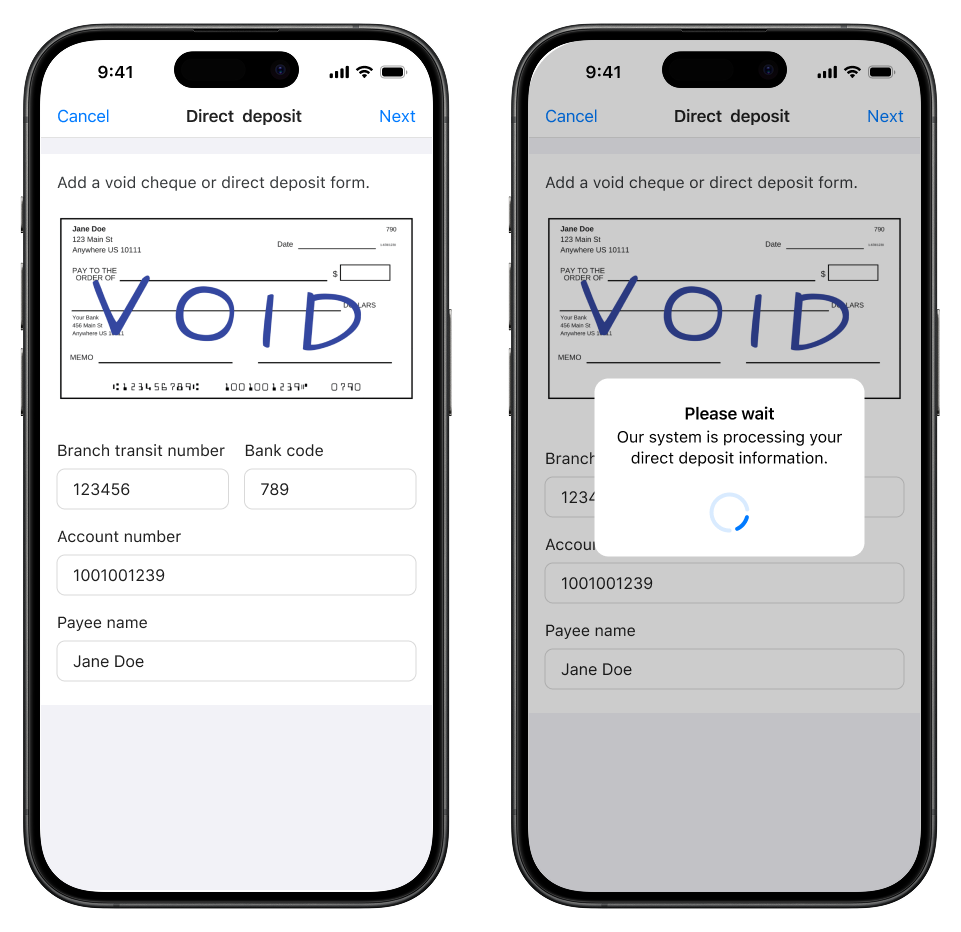
Automated verification
Using OCR-extracted data, the system compared banking details from uploaded documents with user-entered information to identify potential discrepancies.
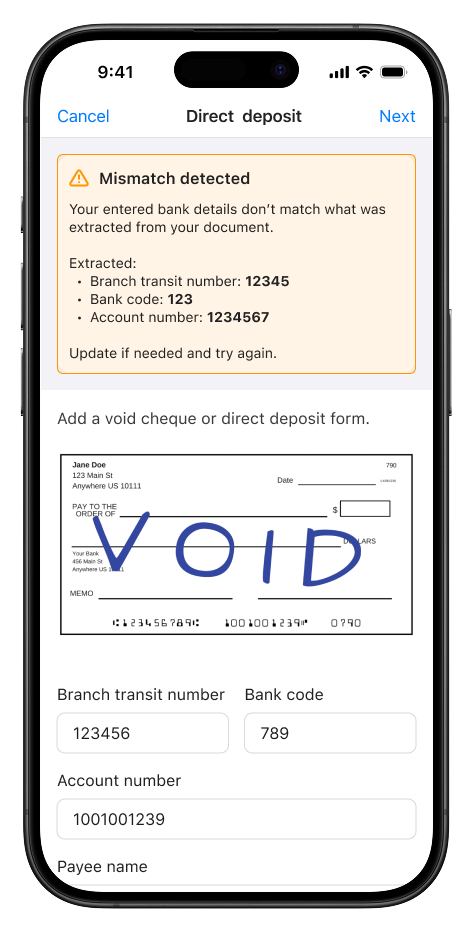
Clear feedback
I designed verification states that communicated the results clearly, helping users understand when their information matched or required attention.
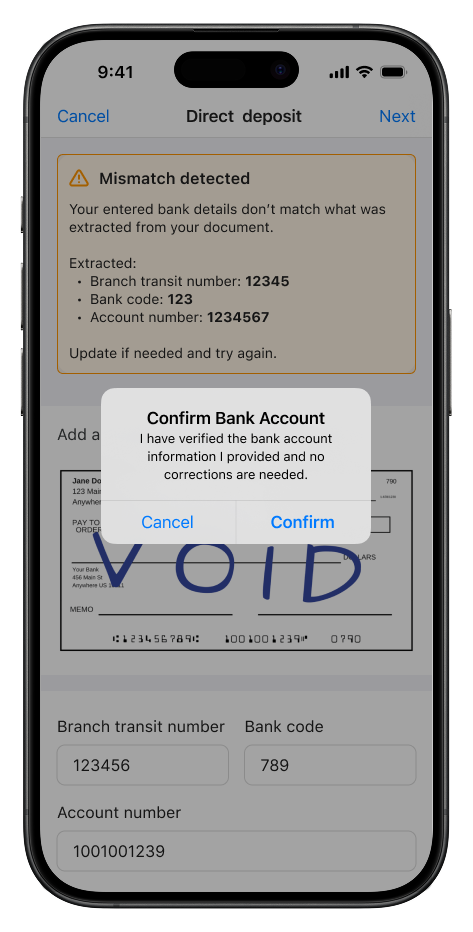
Handling verification exceptions
I designed alternative paths for situations where verification detected a mismatch, failed, or couldn't be completed. Users could still proceed in each scenario, with tailored messaging and a confirmation step to ensure they understood their decision.
Building confidence in banking verification
The solution met the business goal of leveraging OCR to automate banking verification and identify discrepancies before submission, with the aim of reducing the risk of failed reimbursements.
Early error detection
Designed to identify discrepancies between banking documents and user-entered details before submission.
Automated comparison
Used OCR-extracted banking information to support automated verification against user-entered details.
Exception handling
Defined alternative paths for situations where automated verification couldn't be completed.
Designing beyond the ideal scenario
This project reinforced the importance of anticipating edge cases when designing around automation. By exploring technical limitations and defining alternative paths early, I was able to design an experience that supported users even when verification didn't go as expected.
Back to top ↑